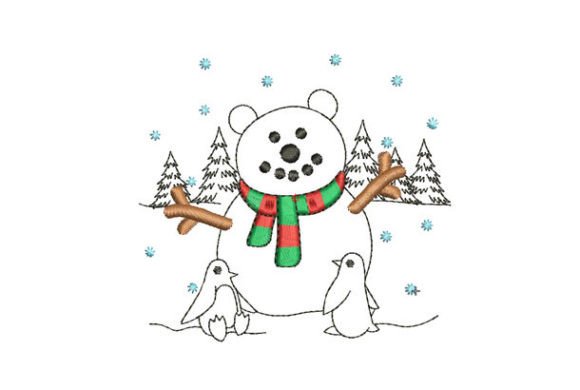
Merry Christmas Bear
A Designer’s First Glance: Whimsy with Warmth, Not Just Holiday Clutter
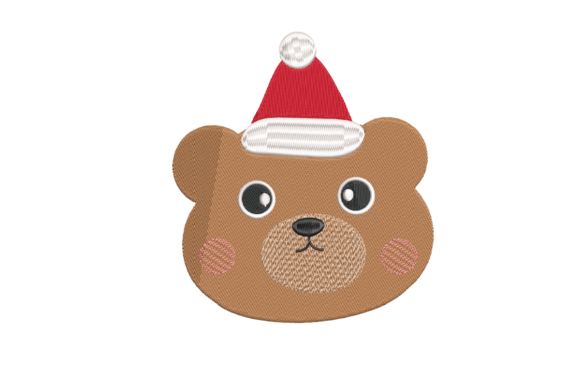
When Merry Christmas Bear popped up in my design library, I paused—not because it’s flashy, but because it *feels* intentional. It’s not a frantic Santa or a glitter-bombed tree; it’s a soft-eyed bear wearing a tiny scarf, holding a modest wreath, with clean outlines and gentle curves. The shape sits comfortably within a vertical 4”–5” footprint—compact enough for a baby onesie chest pocket, yet generous enough to read clearly on a tote bag front. There’s no aggressive ornamentation, no overwrought lettering. Just quiet cheer. That matters. In my work stitching custom holiday gifts for local boutiques, I’ve learned customers respond more warmly to designs that feel handmade than mass-produced—even when they’re digital embroidery files.
How It Lands on Real Products (Not Just Screens)
Last week, I stitched Merry Christmas Bear onto three very different items: a heavyweight organic cotton tea towel, a brushed cotton baby blanket, and a midweight unisex sweatshirt. On the towel, the fill stitch held beautifully—the bear’s fur texture read as subtle, not muddy. On the blanket, I used a lightweight tear-away stabilizer and kept thread colors muted (cream on oat, charcoal on heather grey); the result looked thoughtful, not kitschy. And on the sweatshirt? It held up without puckering—no surprise, given the balanced stitch density. No dense satin-stitch overload in the wreath or scarf edges, no fragile running-stitch details that vanish after one wash.
This is where Merry Christmas Bear earns its keep: it translates reliably across custom apparel, embroidered patches, pillow covers, and even small-batch nursery decor. As an Etsy seller myself, I appreciate how well it photographs in printable mockups—its proportions flatter both light and dark fabric backgrounds, and it scales cleanly for social media thumbnails. It doesn’t scream “Christmas,” which actually helps. A customer buying a personalized gift for a secular family or a minimalist-leaning client won’t blink. It feels inclusive, not exclusionary.
Where to Use It Thoughtfully (and Where to Pause)
That said, Merry Christmas Bear isn’t bulletproof—and pretending it is risks your reputation as a craft business owner or apparel decorator. Avoid it on ultra-thin fabrics like chiffon or lightweight rayon unless you add cutaway stabilizer and reduce top tension. On highly textured fabrics—think bouclé sweaters or thick terry cloth—test first: the bear’s rounded ears and wreath loop can blur if stitches don’t nest cleanly into the pile. Curved surfaces like caps require careful hooping and possibly re-digitizing of the lower curve—this design wasn’t built for high-crown embroidery, so treat it as a front-panel or flat-surface option only.
Also, check the smallest elements yourself: the bear’s eyes are likely satin-stitched, not filled. If your machine struggles with tight curves under 3mm, those may need manual touch-up—or better yet, a test run on scrap. And while it’s labeled ideal for informal Christmas sewing projects, don’t assume it’s license-free for resale. Confirm whether your purchase includes commercial embroidery rights before listing finished products on your small shop site or bundling it into digital embroidery file packs.
What It Adds to Your Handmade Product—and What It Doesn’t
Merry Christmas Bear elevates perceived value without demanding perfection from the maker. Its simplicity means fewer thread breaks, less re-hooping, and faster turnaround—critical when fulfilling holiday orders for local craft fairs or boutique consignment. Customers notice that polish: the clean edge of the wreath, the consistent spacing between bear and text, the absence of stray jump stitches. It reads as professional, not rushed.
But let’s be real—it won’t carry your entire holiday collection. It’s not an applique design with layered fabrics, nor does it include alternate colorways or seasonal variants. It’s one strong, focused machine embroidery design. That’s its strength. Use it as a signature element: pair it with neutral monograms on kitchen towels, stitch it solo on the chest of a corduroy cap, or combine it with simple running-stitch borders on a linen pillow cover. It supports your brand voice instead of drowning it out.
Practical Designer Notes Before You Stitch
- Always test on scrap fabric matching your final project’s weight, stretch, and finish—even if you’ve used Merry Christmas Bear before.
- Review stitch density in your embroidery software. If fill areas look overly heavy, consider reducing density by 5–8% for delicate fabrics.
- Confirm hoop size before loading. This design likely fits standard 4×4 or 5×7 hoops—but verify, especially if layering with other elements.
- Inspect small details at 200% zoom: eyes, wreath leaves, scarf fringe. Are they fully digitized, or do they rely on user-added embellishment?
- Test thread color contrast on both light and dark fabric swatches. Some reds or greens in holiday palettes fade or bleed—opt for high-quality polyester threads.
- Use proper stabilizer: tear-away for stable wovens, cutaway for knits or stretchy blends, and water-soluble for delicate top layers.
- Check licensing before selling finished items or reselling the digital embroidery file. “Can be use” in the description isn’t legal clarity—dig deeper.
Final Thought: A Reliable Note in Your Holiday Chord
Merry Christmas Bear won’t win design awards for innovation—but then, it’s not trying to. It’s a well-structured, quietly confident machine embroidery design that serves real needs: personalization without pretense, charm without clutter, and holiday warmth that doesn’t expire on December 26th. Whether you’re stitching a one-off personalized gift, building a cohesive line of small shop products, or sourcing dependable design assets for your embroidery service, this bear holds its ground. Just remember: great embroidery isn’t about the flashiest file. It’s about the one that stitches true, sells consistently, and makes your customer smile—not because it’s loud, but because it feels like it belongs.