Christmas Bears
A Playful, Warm First Impression — Not Just Another Holiday Clipart
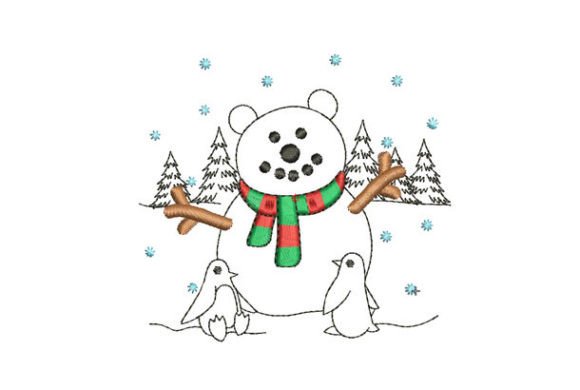
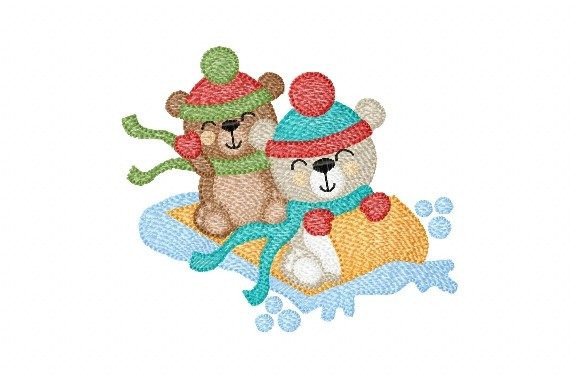
When I opened the Christmas Bears embroidery file for the first time, what struck me wasn’t just its cuteness—it was its quiet confidence. These aren’t cartoonish or overly stylized bears; they’re rounded, softly proportioned, with gentle expressions and subtle holiday cues—tiny holly sprigs, a single bow, maybe a mitten tucked under one paw. The layout feels intentional: balanced but not rigid, friendly without tipping into saccharine. It reads as a cohesive machine embroidery design, not a collection of isolated elements stitched together. That matters—especially when you’re planning a handmade product meant to land well with real customers.
Where Christmas Bears Actually Shines (and Where It Breathes Easiest)
I tested Christmas Bears on three very different real-world items: a heavyweight organic cotton tote bag for a local boutique’s holiday launch, a soft fleece baby blanket for a custom gift order, and a midweight unisex sweatshirt for my own small shop’s limited-edition drop. In each case, the design held up—not because it’s technically flawless, but because its visual rhythm matches how people *see* warmth and celebration.
- Tote bags & tea towels: The open negative space around the bears lets fabric breathe. No overcrowding, no visual fatigue—even at 4.5" wide, it reads clearly from across a craft fair table.
- Sweatshirts & baby onesies: The stitch density feels moderate—not too sparse (which risks flimsiness), not too dense (which can stiffen delicate knits). On fleece, it stayed supple. On a lightweight ribbed knit? I’d add tear-away + light cut-away stabilizer underneath, but it didn’t pucker or distort.
- Embroidered patches & aprons: Because the outlines are clean and the inner details (like bear fur texture or scarf folds) use thoughtful fill stitch rather than micro-satin, it translates cleanly when cut and fused. No fraying corners, no lost definition after washing.
Where to Pause—and Why It’s Worth It
Christmas Bears isn’t magic. It won’t rescue poor stabilization, weak thread tension, or a mismatched hoop size. Here’s where I slowed down—and what I learned:
- Small hoops (under 4"): The full scene is best suited for 5x7" or larger. If you’re stitching just one bear solo, check whether the file includes individual elements—or if you’ll need to crop carefully. Some corners get tight; running stitch details near ears or paws can vanish on tiny scales.
- Textured or stretchy fabrics: On terry cloth towels or jersey knits, I pre-tested with a scrap using the exact same stabilizer combo I planned to use commercially. The design’s curves respond well—if your stabilizer supports the give.
- Dark or black fabric: The contrast works beautifully… but only if your thread colors are rich and true. I ran a quick black-and-white mockup first. What looked warm in color became muddy in grayscale—so I swapped one beige thread for a creamier tone. Small tweak, big difference in perceived quality.
- Curved surfaces (caps, beanies): This isn’t a cap-optimized embroidery file. The bottom edge sits flat. For curved application, I’d simplify the base or add a slight curve manually—or use it as a front-panel centerpiece instead of wrapping around.
What Customers Notice (Before They Even Read the Label)
Last week, a customer emailed me about the sweatshirt she bought with Christmas Bears embroidered on the chest: “It doesn’t look ‘mass-produced’—it looks like someone *chose* this bear for me.” That’s the quiet power here. The design avoids clipart flatness. Its proportions, spacing, and subtle layering (a light satin stitch on the bow, softer fill on fur) create depth without complexity. That builds customer trust—especially for Etsy sellers and handmade shop owners who rely on perceived care and intention.
It also lifts perceived value. A plain sweatshirt + Christmas Bears becomes a keepsake. A kitchen towel with this design isn’t just functional—it’s giftable, Instagram-ready, and quietly branded. For small business owners, that means less explaining and more emotional resonance at point of sale.
Designer Notes You’ll Want to Keep Handy
Before you load Christmas Bears into your machine or list it in your digital shop:
- Test on scrap fabric—same type, same stabilizer, same thread brand. Stitch density shifts with fiber content.
- Check thread color contrast on both light and dark backgrounds. Don’t assume “red” thread reads as festive on charcoal heather.
- Review small details under magnification. Are eyes legible at 3"? Does the bow hold shape after trimming?
- Confirm hoop size before digitizing adjustments. If your machine maxes out at 4x4", you may need to split or simplify.
- Use proper stabilizer—especially for anything wearable. Medium-weight cut-away works for most stable fabrics; for knits, go hybrid.
- Verify licensing before selling finished items or bundling the digital embroidery file with other design assets. This affects Etsy sellers, craft fair vendors, and digital product creators alike.
- Try a printable mockup in grayscale first. If it loses charm there, it’ll likely flatten on camera or in low-light gifting scenarios.
Final Thought: It’s Not Just Christmas—It’s Connection
Christmas Bears works because it feels human-made—not algorithm-generated, not trend-chasing. It fits naturally on a baby blanket handed to a new parent, on a staff appreciation tote at a small café, or as a subtle accent on a linen pillow cover in a cozy living room. It doesn’t shout. It invites. And in a market crowded with flashy, over-digitized holiday motifs, that restraint is its strongest feature.
If you’re choosing embroidery for real projects—not just practice runs—you want designs that support your voice, not drown it out. Christmas Bears does that. It leaves room for your craftsmanship to show. And that, for any designer, small shop owner, or maker building something meaningful, is worth more than perfect stitch count.