Christmas Deer Face Cute Reindeer
A Designer’s First Look: Charm Without Clutter
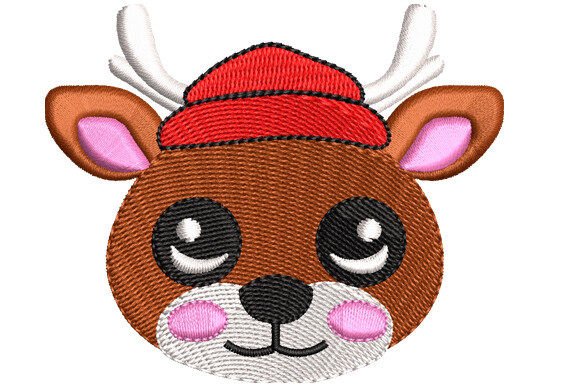
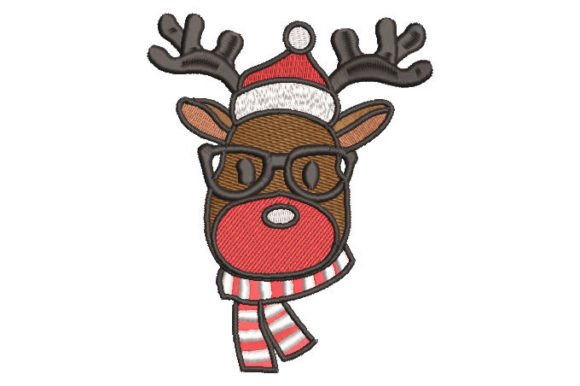
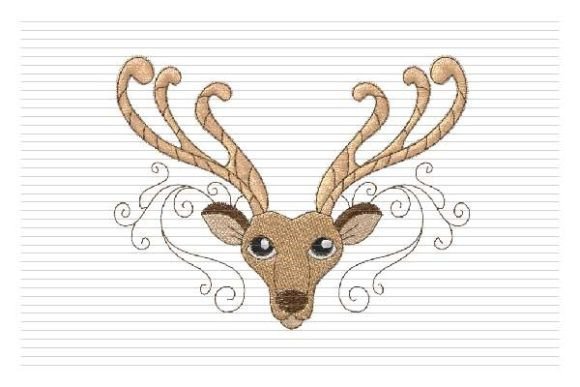
When I opened Christmas Deer Face Cute Reindeer, what struck me wasn’t just its holiday warmth—but how instantly readable it is at small scale. The face is centered, balanced, and intentionally simplified: soft antlers curve outward without sharp points, eyes are round and friendly (not overly detailed), and the muzzle has gentle contouring—not heavy satin stitch borders or fussy fill patterns. It’s a machine embroidery design that breathes. That matters. Too many Christmas embroidery files drown in ornamentation; this one trusts the viewer to feel the cheer without visual noise. It’s the kind of embroidery file I’d reach for when designing a handmade product meant to feel cozy, not crowded.
Where It Shines—And Why Customers Notice
Last week, I stitched Christmas Deer Face Cute Reindeer onto a natural linen tea towel for a local boutique’s holiday collection. The result? Immediate double-takes at the craft fair. People smiled before they even read the tag. That’s the power of intentional simplicity in holiday embroidery. It works because it’s legible at arm’s length—and still holds up on a 4-inch hoop. I’ve since used it on baby onesies (with lightweight tear-away stabilizer), cotton tote bags (medium-weight cutaway), and unstructured canvas aprons. In each case, the design retained its softness and character—no puckering, no thread breakage, no “flat” look from over-stuffing.
It’s especially effective as a sweatshirt embroidery focal point—centered above the pocket or subtly angled on the sleeve. Because the shape is compact and symmetrical, it doesn’t fight the drape or stretch of knits. And for Etsy sellers listing personalized gifts? This design reads clearly in printable mockups. Whether you’re showing it on a cream sweater or a charcoal scarf, the contrast stays friendly, never harsh.
Fabrics & Fit: Where Caution Meets Confidence
That said, Christmas Deer Face Cute Reindeer isn’t magic—it responds honestly to material choices. On thin cotton poplin or rayon challis? Use a light stabilizer *and* test first. The antler tips and inner eye details can blur if the fabric shifts mid-stitch. On textured fabrics like terry cloth or bouclé, reduce density slightly or opt for a slightly larger size—the fill stitch needs breathing room. And while it handles dark fabric beautifully (especially with ecru or cream thread), avoid pairing it with ultra-bright neon threads unless that’s your brand voice; the design’s quiet charm gets lost.
Curved surfaces—like structured caps or curved pillow covers—require careful hooping. I recommend floating the stabilizer and basting the fabric taut, not stretched. The face’s clean lines forgive minor tension shifts, but dense satin stitch around the muzzle won’t hide inconsistencies like a looser running stitch would.
What You’ll Love in Real Production
- Stitch clarity holds up across sizes—from 3.2" to 5.5"—without losing definition in the eyes or antler edges.
- No tiny lettering or fragile stems to snap during trimming—making it ideal for embroidered patch production.
- The layout leaves generous negative space, so it layers well with monograms or simple border stitches on kitchen towels or nursery decor.
- As a holiday embroidery asset, it feels seasonal without screaming “December 25th.” That extends wearability—and resale value—for small shop products.
Design Integrity in Commercial Use
If you’re an Etsy seller or craft business owner, authenticity matters. Christmas Deer Face Cute Reindeer delivers a handmade presentation without looking amateurish. Its proportions are calibrated—not too tall, not too wide—so it scales cleanly across product types. I’ve seen similar designs fail on baby embroidery because the face overwhelms the onesie’s chest area; this one fits comfortably within standard infant chest placements. And unlike some applique design hybrids, it’s fully stitched—no raw edges to fray in the wash. That builds customer trust, especially for personalized gift buyers who care about longevity.
For digital product sellers: confirm licensing before bundling this embroidery file into design packs. As a standalone machine embroidery design, it’s versatile—but commercial rights aren’t implied by format alone. Always check the source.
Practical Designer Notes Before You Stitch
- Test on scrap fabric *with your exact stabilizer and thread colors*—especially if using variegated or matte threads.
- Review stitch density in your editing software. If it feels heavy for lightweight fabric, reduce fill stitch density by 5–10%.
- Confirm hoop size compatibility. While it fits common 4x4 hoops, some versions may include larger formats—check your file package.
- Inspect small details at 200% zoom: antler tips, eye highlights, and muzzle curves should be smooth, not jagged.
- Run a black-and-white mockup. Does the silhouette hold up? Does it read as “deer” before color adds context?
- Compare light and dark background previews—this design gains warmth on cream but stays crisp on navy.
- Use proper stabilizer: cutaway for knits, tear-away for stable wovens, and fusible + tear-away for scarves or sheer layers.
- Verify whether your version supports both personal and commercial embroidery use—don’t assume.
Final Thought: A Design That Earns Its Place
Christmas Deer Face Cute Reindeer isn’t just another holiday embroidery file. It’s a thoughtful, execution-ready design asset—one that balances playfulness and polish. It elevates a plain tote bag into a keepsake. It softens a modern sweatshirt without leaning into cliché. And for creative entrepreneurs building a cohesive line—whether for craft fairs, Etsy listings, or boutique wholesale—it adds consistent, recognizable charm. In a season full of visual noise, this design earns attention by staying quiet, clear, and kind. That’s not just smart embroidery. It’s good design sense—stitched, tested, and trusted.