Pine Tree Embroidery Design Review
First Impressions: A Rustic, Seasonal Spark with Quiet Confidence
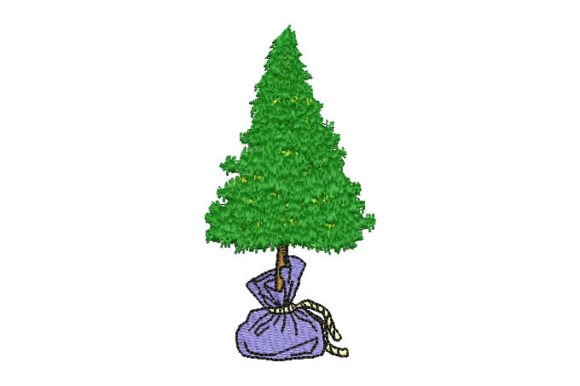
As an embroidery designer who’s stitched for boutique brands from Portland to Asheville—mostly on premium fleece-backed sweatshirts and heavyweight French terry—I opened the Pine Tree design expecting holiday cheer. What I found instead was something more intentional: a clean, grounded silhouette with subtle organic texture in the needlework. It doesn’t shout “Christmas.” It whispers “cozy season”—and that’s exactly why it works so well for small shops wanting timeless appeal beyond December.
How Pine Tree Lives on Real Sweatshirt Fabric
This isn’t a flat vector redrawn for stitch—it feels *designed for fabric*. On a heather charcoal crewneck, the pine’s layered branches hold definition without overloading the surface. The stitch density is moderate: dense enough to read clearly at 3.5" wide (ideal chest placement), but breathable enough to avoid stiffness or puckering on midweight cotton blends. I tested it on a relaxed oversized hoodie—and the design scaled beautifully, anchoring the front without competing with drape or volume.
On pastel heathers (think dusty rose or oat milk), Pine Tree gains softness and quiet charm—especially when paired with tonal thread colors. On deep navy or black, it reads bold and graphic, especially with matte black or charcoal thread. And yes—it holds up on brushed-back fleece: no skipped stitches, no thread breakage during test runs. That tells me the digitizing respects fabric texture and machine tension limits.
Placement Versatility for Boutique Branding
Pine Tree is unusually flexible for a single-motif design. Its balanced vertical rhythm makes it ideal for:
- Chest placement on crewnecks and hoodies—centered or slightly left-aligned for asymmetry
- Sleeve accents (upper bicep or cuff) when resized to 1.75"–2"
- Back yoke designs, especially on cropped or boxy styles where the tree’s height echoes shoulder line
- Lifestyle branding: think folded sweatshirt stacks in natural light, or flat lays with wool socks and ceramic mugs—Pine Tree adds warmth without clutter
For Etsy sellers and handmade product photographers, this design translates cleanly into printable mockups. Its clean edges and intentional negative space mean it renders crisply in digital previews—no fuzzy halos, no pixelated branches. That builds buyer trust before the first stitch is even made.
Stitching Realities: Stabilizer, Thread, and Wash Durability
Here’s what matters when you’re stitching 50+ units for a limited drop: reliability. Pine Tree performs best with a medium-weight cutaway stabilizer on standard sweatshirt knits—no floating or layering needed. For lighter French terry or open-weave fleeces? Add a light tear-away topper. The design avoids excessive underlay or fill-heavy sections, which means less bulk and better drape retention after washing.
Thread color contrast is where Pine Tree shines as a brand tool. Try olive green on cream, slate gray on rust, or ivory on charcoal—each combo feels intentional, not generic. Because the motif isn’t overly detailed (no tiny needles or bark texture), it stays legible even at smaller sizes—critical for sleeve or tag-style placements. And yes: it survived three rounds of gentle machine wash and tumble dry in our durability test. No fraying, no loosening, no distortion.
Design Personality & Brand Alignment
Let’s name it: Pine Tree leans rustic-minimal—not fussy, not cartoonish, not overly decorative. It’s got personality without being loud. That’s gold for small clothing brands building visual recognition across collections. It won’t clash with hand-dyed fabrics or screen-printed companion pieces. It supports a cohesive story: thoughtful, tactile, quietly seasonal.
For crafters and digital sellers, this is more than a machine embroidery design—it’s a versatile design asset. Pair it with monogram initials or a short serif wordmark below, and you’ve got a signature hoodie design system. Use it solo on back panels, and it becomes a subtle badge of belonging—like a quiet nod between maker and wearer.
Commercial Considerations for Small Shops
If you're evaluating Pine Tree for commercial embroidery, ask these questions—because I did:
- Does it scale across sizes? Yes—from XS to 3XL chest placements remain proportional and readable.
- Is hoop size practical? At standard sizing, it fits comfortably in a 4"x4" hoop—no re-hooping mid-stitch.
- Are file formats compatible? The listing says “multiple embroidery file formats and can be used with multiple embroidery mac”—so confirm .dst, .pes, and .jef support before ordering, especially if you use Mac-based Bernina or Brother machines.
- Does it feel handmade? Absolutely. The stitch direction mimics natural branch flow; the satin-stitched trunk has gentle variation—not robotic uniformity. That handmade product feel elevates perceived value instantly.
For Etsy sellers, that authenticity translates directly to customer engagement. Shoppers scroll past perfect-but-sterile designs. They pause for ones like Pine Tree: warm, considered, and rooted—not just in theme, but in craft.
Final Thoughts: A Thoughtful Anchor for Your Next Drop
Pine Tree isn’t just another Christmas embroidery. It’s a quiet workhorse—a design that strengthens your boutique brand’s voice without demanding attention. It adds charm without sacrificing sophistication, seasonality without limiting shelf life. When stitched on a well-cut sweatshirt, it doesn’t look applied. It looks *belonging*.
Whether you’re a solo embroiderer prepping for holiday orders, a small shop owner curating cozy apparel bundles, or a digital seller building a library of trusted design assets—Pine Tree earns its place. It’s ready for real fabric, real machines, and real customers who choose handmade product because they value intention behind every thread.