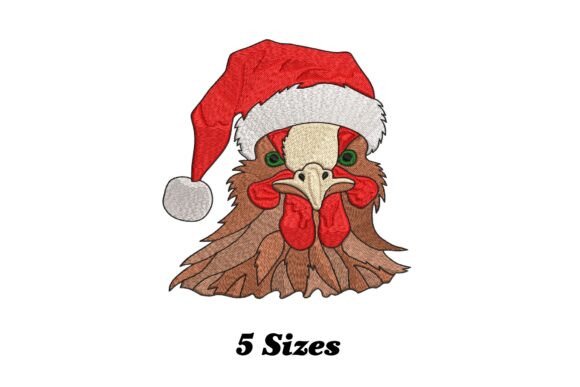
Rooster Christmas: A Charming Embroidery Design for Personalized Gifts
As an embroidery designer who’s developed over 200 machine embroidery designs for small shops, Etsy sellers, and custom gift studios, I test every file like it’s going straight into a client’s nursery, wedding keepsake box, or holiday market stall. When Rooster Christmas landed in my inbox, I didn’t just open the file—I imagined the finished product on a linen pillow cover, a soft cotton baby blanket, and a hand-stitched kitchen towel hanging in a farmhouse kitchen. That’s how I evaluate charm, clarity, and commercial readiness.
First Impressions: Quirky, Warm, and Instantly Recognizable
The Rooster Christmas design delivers immediate visual warmth—think cheerful red comb, expressive eye, and subtle holiday hints (a tiny holly sprig or bow, perhaps?) without overwhelming literalism. It leans playful and handmade rather than sleek or minimalist, making it ideal for customers who value authenticity over polish. There’s no stiff symmetry or robotic precision—just joyful, confident stitching that reads as human-made, even when stitched by machine. It feels seasonal but not dated, quirky but not cartoonish, and charming without tipping into cutesy overload. For baby embroidery or wedding gift projects, that balance is gold.
Versatility Across Meaningful Product Categories
This machine embroidery design shines where emotional resonance matters most. On a blanket embroidery project, Rooster Christmas becomes a whimsical heirloom—a gentle nod to farmstead roots or rustic family traditions. As a wedding gift, stitched onto a linen napkin set or pillow cover, it adds lighthearted personality to a couple’s shared love of country living or vintage charm. For baby embroidery, it works beautifully on organic cotton swaddles or muslin burp cloths—soft enough for newborn skin, distinctive enough to stand out at a baby shower.
Etsy sellers and small shop products benefit especially: Rooster Christmas photographs well on neutral backdrops, scales nicely across formats (from 3" hoop sizes on aprons to 5" versions on tote bags), and pairs effortlessly with earthy thread colors—ochre, moss green, deep burgundy—that elevate perceived value. It’s equally at home on embroidered towels for boutique hotels, custom tote bags for craft fairs, or pillow covers sold alongside handmade ceramics and soy candles.
Where to Use Rooster Christmas Thoughtfully
While versatile, this design isn’t universal—and that’s okay. Its character thrives best on stable, medium-weight fabrics. Avoid using it on stretchy baby clothes without extensive testing: fine beak details or delicate feather outlines may distort on knit blends. Similarly, textured fabric like heavy terry cloth or thick woven towels can swallow fine stitch work—opt instead for smooth cotton or linen blends for crisp definition.
On dark fabric, contrast matters. Light thread colors (cream, pale gold) read beautifully, but avoid off-white on charcoal unless you’ve tested thread sheen and density. And while Rooster Christmas is fun on curved surfaces like mugs or rounded totes, remember: embroidery lives flat. Stick to flat-panel applications—pillow fronts, towel hems, tote bag centers—unless you’re using specialty hoops and stabilizers.
Frequent washing? Yes—but only if you choose quality thread and secure backing. For embroidered towel or apron orders, recommend cold wash/delicate dry to preserve detail. Customers appreciate care notes—it builds trust in your handmade product expertise.
How Rooster Christmas Elevates Giftability and Customer Trust
A personalized gift isn’t just stitched—it’s felt. Rooster Christmas carries narrative weight: resilience, dawn optimism, family heritage, or quiet rural joy. That subtext translates directly into buyer engagement. Shoppers linger longer on listings featuring this design because it sparks memory (“My grandfather kept chickens”) or aspiration (“This is the kind of home I want”). That emotional connection lifts average order value and encourages repeat purchases.
Photographing Rooster Christmas is intuitive—its bold silhouette pops against natural light and raw wood textures. Pair it with a handwritten tag, twine, or dried lavender for cohesive branding. And because it avoids cliché (no Santa hats or snowflakes), it stays relevant beyond December—making it a year-round small shop product, not just a seasonal flash.
Practical Embroidery Notes Every Maker Should Follow
Before stitching Rooster Christmas for a customer—or listing it on Etsy—run these checks:
- Test on scrap fabric first, especially if using new thread brands or stabilizer combos.
- Verify hoop size compatibility with your machine and intended product (e.g., 4x4 for baby onesies, 5x7 for pillow covers).
- Review stitch density: high-density fills may overwhelm lightweight fabrics; adjust underlay or reduce density if needed.
- Choose stabilizer wisely—cutaway for stretchy items, tear-away for stable cottons, and water-soluble for delicate lace overlays.
- Compare mockups on both light and dark fabric; thread color contrast shifts dramatically.
- Inspect small details post-stitch—especially the rooster’s eye and comb edge—for skipped stitches or thread breaks.
- Confirm commercial embroidery rights before selling finished products. If your digital embroidery file license permits resale, document it—you’ll need that clarity for Etsy policy compliance or wholesale inquiries.
And one more thing: don’t skip the printable mockup. Show Rooster Christmas stitched on a real kitchen towel or baby blanket in your listing photos—not just a generic template. That realism converts browsers into buyers.
Final Thoughts for Crafters and Small Business Owners
Rooster Christmas isn’t just another birds embroidery file—it’s a storytelling tool. It invites customization (swap thread colors to match nursery palettes or wedding florals), supports scalable production (batch-stitch 20 towel sets in one afternoon), and reinforces your brand as thoughtful, skilled, and emotionally intelligent. Whether you're an embroidery maker building a signature collection, a wedding gift designer curating meaningful tokens, or a digital product seller expanding your catalog, this design earns its place—not because it’s trendy, but because it’s trusted.
It reminds us that the best personalized gift doesn’t shout. It winks. It nods. It crows softly at sunrise—and leaves room for love, laughter, and legacy to do the rest.